

Why a Custom Laravel Web Application Is Often More Future-Proof Than Separate Off-the-Shelf Tools
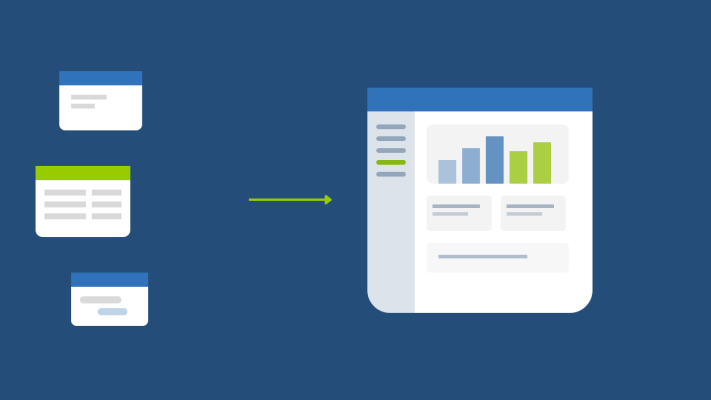
Many growing companies start with separate off-the-shelf tools. That makes sense: one tool for CRM, another for planning, a separate system for invoicing, and perhaps an extra solution for reporting. In the beginning, that setup often works well. But as processes become more complex, teams expand, and information lives in multiple places, friction starts to build. That is usually the moment when a custom Laravel web application becomes the more future-proof option.
Not because standard software is automatically the wrong choice, but because growth usually requires more control, better integration, and a solution that fits the way a business actually operates.
Separate tools are fast to start with, but they do not always scale well
Off-the-shelf tools offer a clear advantage: they help you get started quickly. For many businesses, that is attractive in the early stage. Implementation is straightforward, monthly costs seem manageable, and there is no need to invest in custom software right away.
Over time, though, a different picture often emerges. Each tool has its own logic, interface, and limitations. Team members switch between systems, data becomes fragmented, and processes start depending on manual workarounds.
What once felt efficient can gradually turn into a patchwork of software that is harder to manage and harder to extend.
The hidden costs of fragmented software
Separate tools often look cheaper than custom software, but in practice that comparison is rarely complete. Subscription costs are visible, while indirect costs tend to build up quietly in the background.
- Teams spend extra time entering the same information more than once.
- Important data is spread across multiple systems.
- Connections between tools are limited or fragile.
- Reporting becomes less reliable because data is not organized centrally.
- New requirements regularly hit the limits of existing software.
For a growing business, that does not just cause operational delays. It also reduces control over quality, planning, and decision-making.
Why Laravel is a strong foundation for custom software
Laravel is a strong choice for many custom web applications because it is a mature and proven framework. It provides a solid technical foundation for building functionality in a structured, maintainable, and secure way.
What matters most to businesses is that Laravel supports growth well. An application can start small, focused on one specific process, and later expand with additional modules, integrations, or user roles. That means you do not have to build everything at once. You can invest step by step in a system that remains valuable over time.
That combination of flexibility, structure, and maintainability makes Laravel especially suitable for companies looking for more than a short-term fix.
Custom software supports your processes instead of forcing new ones
With standard software, a business often has to adapt itself to the tool. That may sound minor, but it has a real long-term impact. Processes get bent out of shape, exceptions are handled manually, and teams create workarounds just to keep things moving.
With a custom Laravel web application, the logic works the other way around. The software is built around the real processes, roles, and information flows inside the business. That usually improves usability, but it also creates more consistency and reduces error-prone manual steps.
For growing companies, that matters a great deal. As more customers, employees, and processes are added, a clear digital foundation becomes more valuable.
Integrations and scalability become easier to manage
Growth usually means more systems, more data, and more dependencies. Think of integrations with accounting, CRM, planning software, customer portals, or internal dashboards. In a landscape of separate tools, those connections are often built with extra plug-ins or external middleware.
That can work, but it also makes the whole setup more fragile. When one tool changes, the impact can ripple through multiple processes. In a custom web application, you have much more control over how integrations are designed and how data moves through the system.
That creates more stability in day-to-day management and makes future expansion easier.
Future-proof also means maintainable
Being future-proof is not only about adding new features. It is also about maintenance, clarity, and technical sustainability. A strong custom application is not just aligned with today’s process, but also structured logically for future development.
With a clean Laravel architecture, it becomes easier to adjust functionality, resolve issues in a targeted way, and add new features without turning the system into something unnecessarily complex. That matters for businesses that want their software to remain a serious long-term asset.
A system that appears scalable but is difficult to maintain will still slow growth in practice.
When custom software becomes the logical next step
Not every business needs a custom application immediately. But there are clear signals that separate tools no longer match the phase an organization is in.
- There is too much manual work between different systems.
- Teams lack a clear overview or work with conflicting data.
- Reporting takes more time than it should.
- New processes are difficult to fit into existing tools.
- The software no longer supports the organization and starts holding it back.
At that point, custom software is often no longer a luxury. It becomes a logical investment in control, efficiency, and further growth.
Conclusion
Separate off-the-shelf tools can be a perfectly valid starting point, but for growing businesses they are not always the best long-term foundation. As processes become more important and systems need to work together more closely, the need for consistency, scalability, and maintainability grows as well.
A custom Laravel web application often provides more control and a stronger digital foundation. Not as a goal in itself, but as a practical choice for businesses that want to keep moving forward without being constrained by their own software landscape.
If you want to take a critical look at your current tools and assess whether custom software is the logical next step, that is often exactly the point where a solid technical conversation creates real clarity.
Rather have it done than figure it out yourself?
I help businesses in Groningen, across the Netherlands and abroad with exactly this kind of question. Tell me briefly what you need and you will hear back within one working day.
Continue reading